Apple Tree Pruning: Winter vs Summer Cuts Compared
An apple tree does not simply lose a branch when you cut it — it reacts. Take the same limb off in January and the tree answers with a burst of strong new shoots the following spring. Take it off in August, and the tree barely flinches, quietly setting flower buds instead. That difference is the whole reason winter and summer pruning exist as separate tools, and knowing which one you are reaching for will save you years of fighting your own tree.
In winter the tree is dormant, running on stored carbohydrate held in the trunk and roots. Every bud you remove means less competition for that finite store, so the buds left behind push away harder. The result is vigour: long extension growth, more leaves, a bigger tree. This is why a hard winter prune on an old, tired apple can produce a thicket of whippy vertical shoots that nobody asked for.
In summer the tree is a working factory. Leaves are making sugars, roots are drawing water, and growth is being checked naturally by shortening days. Cut leafy shoots now and you remove part of the factory as well as the wood. The tree responds by slowing down, and — crucially for a fruit grower — by forming short fruiting spurs and flower buds on the wood that remains. Less shoot, more fruit. Do be careful not to strip too much leaf from a tree carrying a heavy crop, though: fruit size depends on leaves, and overdoing it in July can leave you with a lot of small apples.
Cut in winter for growth. Cut in summer for fruit. The tree will always tell you which one you asked for.
The window runs from leaf fall through to late February, ideally on a mild, dry day. Avoid working in hard frost: the wood is brittle and splits, and cuts made in freezing conditions heal slowly. Winter is when you build a shape, open up a crowded canopy and deal with anything broken or diseased.
Start by taking out the obvious problems before you think about shape:
When you shorten a branch, cut just above an outward-facing bud, sloping the blade slightly away from it, with no stub left behind and no flush cut into the parent branch. On anything thicker than your thumb, use the three-cut method: a shallow undercut, a top cut a little further out, then a final tidy cut back to the branch collar. Leave the collar alone — that ring of wrinkled bark is the tree's own healing tissue.
For a young tree in its first four years, winter is the time to space out your main branches evenly around the trunk and keep the centre open. For a neglected mature tree, spread the work over three winters and never remove more than about a quarter of the canopy in one go.
Late July into August suits most of Britain. By then the current season's shoots have firmed up at the base, the tree has finished most of its extension growth, and leaves are still working hard enough to ripen what is left. This is the moment for trained trees — espaliers, cordons, fans, stepovers, arches — and for any apple in a pot, against a wall or in a small garden where you need to keep it within bounds.
The effect is restraint. Shortening side shoots reduces vigour, encourages the stubby spurs that carry fruit, and lets light into the canopy to ripen the wood and colour the apples. The catch is that it also checks the tree, so do not do it hard to a young apple that still needs to build its framework. Save the heavier work for established trees and trained forms.
Spur-bearing apples — most of the familiar garden varieties — crop on short, stubby spurs on older wood, and they take kindly to summer pruning and spur building. Tip-bearing varieties carry much of their crop at the ends of the previous year's shoots. Shorten those tips in winter and you are cutting off next year's apples. Many varieties sit somewhere in between.
You do not need a book to work it out. Look at the tree in late summer and see where the fruit is hanging: clustered on knobbly spurs along the branches, or at the far ends of young shoots. If it is the latter, keep winter cuts to thinning out and rely on light summer work instead.
Do not prune in September and October if you can help it. Wounds made in mild, damp autumn weather are slow to seal and are the classic route in for silver leaf and canker. Wait until midwinter, or hold off until late summer next year.
Blunt tools bruise bark and leave a ragged cut that heals badly, so sharpen your secateurs before you start and wipe the blades between trees if you have had disease about. Skip the wound paints; a clean cut is better left to seal itself. And resist the urge to tidy everything at once — a tree stripped back hard in a single session will spend the next two seasons growing wood instead of fruit.
In winter, from December to February, do the structural work: remove dead, diseased and crossing branches, open the centre, and shape young trees. In late July and August, walk round with secateurs and shorten the side shoots on trained trees, potted apples and anything that is outgrowing its space, cutting back to three or four leaves. At any time of year, snip out anything obviously dead, broken or diseased as soon as you spot it.
That rhythm — one decisive winter session, one gentle summer tidy — is enough for most garden apples. Watch how your tree responds over a season or two, and adjust. It will soon be obvious whether it wants more restraint or a little more encouragement, and after a few years you will be making those calls without thinking about it.
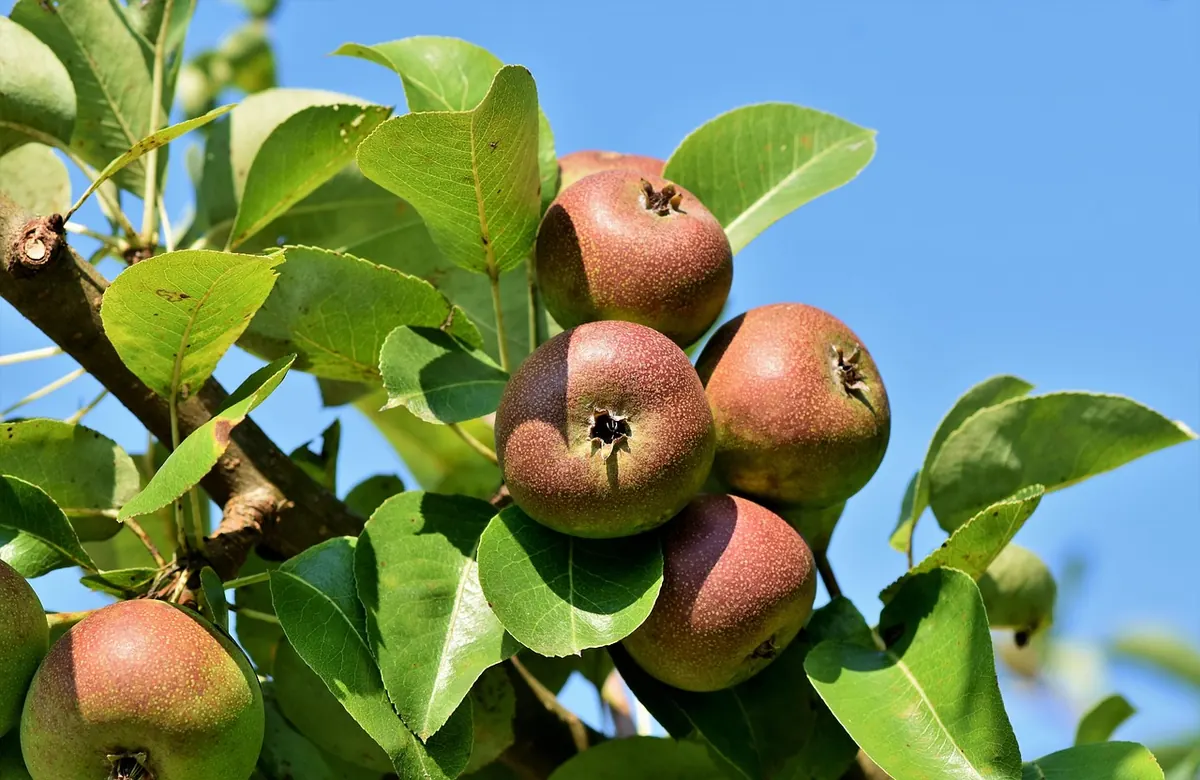
Photo: Ralphs_Fotos / Pixabay
Previous Post
Beginner's Guide to Planting a Fruit Tree in Heavy Clay Soil
Next Post
Common Mistakes When Feeding Raspberry Canes